


Week 1:
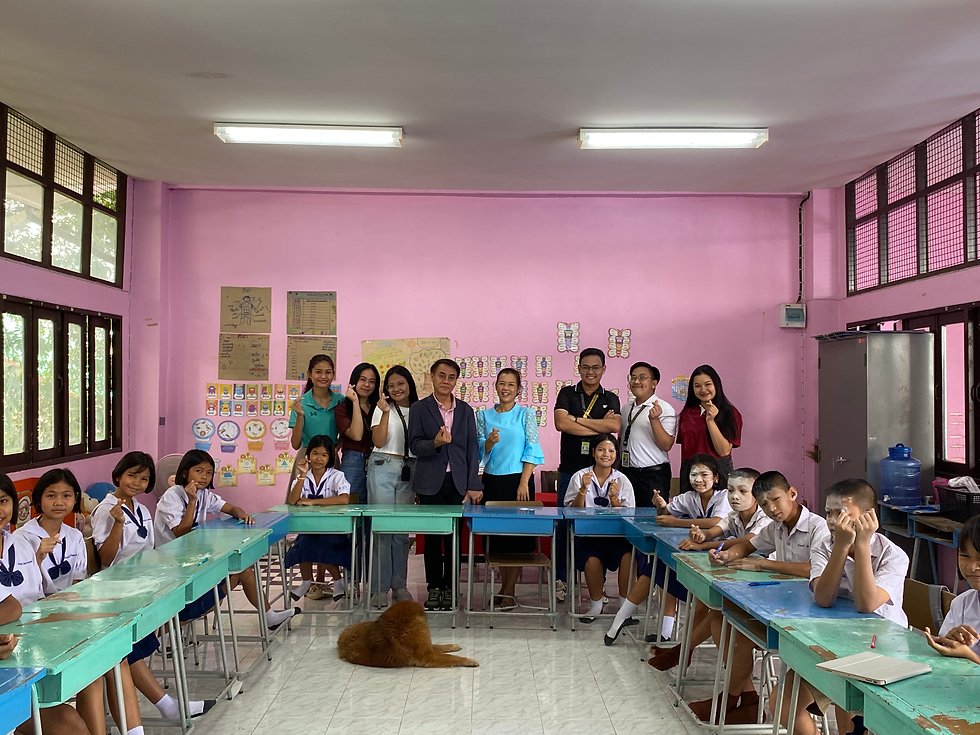
In this journal, I recount my experiences during a program at Udon Thani Rajabhat University, where I was warmly welcomed at Udon Thani International School. The genuine hospitality from professors, the board committee, and fellow pre-service teachers deeply touched me.
During our orientation, I had the chance to introduce myself and share my hopes for the program. UDRU provided us with valuable information about university life, safety measures, and our schedule. We also got insights into the schools we would be working with and met our student buddies.
Initially, the amount of information and the new environment were overwhelming, but thanks to the familiar surroundings and warm hospitality, I quickly adapted. The first day of observation at Udon Thani International School was in the Mathematics class, where I observed Mr. Thomas Karisa's innovative teaching methods. He used collaborative learning, hands-on approaches, and multimedia elements to engage students effectively. The class management and inclusive practices, especially for Thai students needing translation support, were commendable.
In the English class, an audio narrative and a point-based reward system were used to encourage critical thinking. Collaborative activities and role-playing added an interactive dimension aligned with holistic development. The Social Studies/Unit of Inquiry class facilitated open-ended discussions and incorporated multimedia resources for an inquiry-based learning process.
Throughout my observations, I witnessed dynamic teaching approaches across subjects, expanding students' knowledge and fostering engagement, collaboration, and critical thinking. The educational journey extended beyond textbooks into immersive experiences.
The school's commitment to holistic education became evident during the weekly sports day, fostering physical activity, teamwork, and healthy social interactions. The carefully curated library resources, multimedia use in English class, and gamified learning in music class all contributed to a well-rounded and engaging educational experience.
On the last day, I observed an English class that employed a structured and interactive approach to language learning. Mr. Thomas conducted a spelling test, emphasizing foundational language skills. The subsequent session involved a systematic plot analysis, promoting a deep understanding of storytelling. The interactive retelling exercise provided a comprehensive evaluation of language skills, showcasing a multifaceted approach to language learning.


Week 2:
After a week immersed in Udon Thani International School's educational activities, our journey continued with an exploration of local farming practices. The firsthand experience at the farm schools left a lasting impression, showcasing distinctive academic and environmental methodologies that actively addressed sustainability challenges.
Ban Thong-in Suan Morn School, in particular, stood out for its holistic approach, providing children with a practical understanding of sustainable practices and food cultivation processes. Our subsequent visit to Ban Mueang Thong Border Patrol Police School, near the border, revealed a school guided by the Border Patrol Police with unique pedagogical techniques and an integration of agricultural principles into the curriculum.
These farm schools emerged as crucial connectors between the younger generation and local food systems, empowering youth with a deep understanding of sustainability and ecosystem dynamics through a holistic education approach.
The final visit in Ban Nong Kung Kaew was especially memorable, with the teachers and director warmly welcoming us. A cultural exchange with a Filipino teacher offered insights into the country's diversity. An unexpected opportunity for impromptu teaching created a connection with students, allowing us to share basic English vocabulary and conversational skills. This experience further revealed the school's commitment to farm-to-school practices and its profound connection with the environment.


Week 3:
On our initial day at Don Bosco Vitthaya School, we initiated a cultural exchange warmly welcomed by the Middle School Assistant Director, cooperating teachers, and the Director. Despite the language barrier, we introduced ourselves and represented our institution, the Technological Institute of the Philippines, at the school's general assembly for the second semester, fostering cross-cultural understanding.
During our classroom observations with the cooperating teacher, initially conducted in Thai, the English class posed comprehension challenges. However, the use of comprehensive materials and interactive presentations aided our understanding. The teaching methodology prioritized interactive learning, with students collectively exploring lesson units. Practical application followed through question-answer exchanges and conversational exercises, creating a dynamic learning environment.
We adapted to the daily schedule on the second day, observing a Reading and Writing-focused class. The approach was textbook-centered, emphasizing reading comprehension and vocabulary enhancement. Classroom management strategies, such as 'energizer' activities and the 'exit ticket' system, promoted active participation and reinforced learning outcomes.
The Speaking and Listening session focused on pronunciation, reading fluency, and intonation through collective reading and a study of grammar, particularly the passive voice. The teacher effectively facilitated critical thinking by challenging students to distinguish between facts and opinions, using paragraph examples for analysis.
In another observation, the teacher initiated a warm and inclusive environment, fostering community within the classroom. The lesson on descriptive communication, using visual aids and illustrations, ensured a comprehensive understanding. Homework involved crafting a self-descriptive essay using the newly acquired terminology.
Our first classroom observation and assistance session with the native teacher, T. Sol, emphasized the significance of language in culture, society, and individual development. Despite the language barrier, her interactive teaching style encouraged student expression. The past Friday marked the beginning of our co-pre-service teachers' involvement in the SEAMEO Exchange Student Program, showcasing adept teaching despite the language barrier. We provided support during their teaching sessions, contributing to a collaborative educational environment.


Week 4:
On the designated first day of the week, celebrated as a national holiday in Thailand, I immersed myself in preparing for the upcoming week of teaching at Don Bosco Vitthaya School. Focusing on the Listening and Speaking 11 class, I meticulously crafted a comprehensive lesson plan centered around 'The Olive,' incorporating engaging activities and learning materials. Inspired by our cooperating teacher's teaching pedagogy during the week-long observation, I curated a detailed PowerPoint presentation and compiled essential instructional resources.
Taking on the task of conducting the English Listening and Speaking 11 class, I ensured a conducive atmosphere, setting the stage for an engaging learning experience. Initiating with a stimulating icebreaker, I presented a tree mind map, fostering student involvement and collaboration. A warm-up activity preceded an interactive exercise to fortify vocabulary, leading to a collective reading of the text. Despite initial concerns about potential communication barriers, the students actively participated in ensuing discussions with a gentle nudge and encouragement.
The following day seamlessly continued the captivating lesson on "The Olive." Clear instructions set the tone for activities, fostering an environment thriving on active student participation and lively interaction. Notably, even previously underperforming students exhibited newfound enthusiasm and engagement, emphasizing the cultivation of collaborative and critical thinking abilities.
Despite occasional challenges managing mischievous students, assertiveness and robust classroom management techniques maintained a conducive learning environment throughout the lesson. As the day unfolded, a profound melancholy set in, anticipating an impending departure from Udon Thani. Memories of the month-long immersive experience, marked by diverse curriculums and cultural immersion, were etched deeply.
The poignant blend of emotions and fulfillment peaked as we gathered to reminisce and share collective memories and experiences that defined our journey. Engaging in profound reflections on teaching methods, practices, and cultural exchange, we exchanged insights and perspectives. The gathering closed with fond recollections of influential individuals who met along the transformative journey, symbolizing the collective efforts that made the program possible, leaving an indelible mark on our hearts and minds.